



- Published on: 2026-01-19 21:34:00
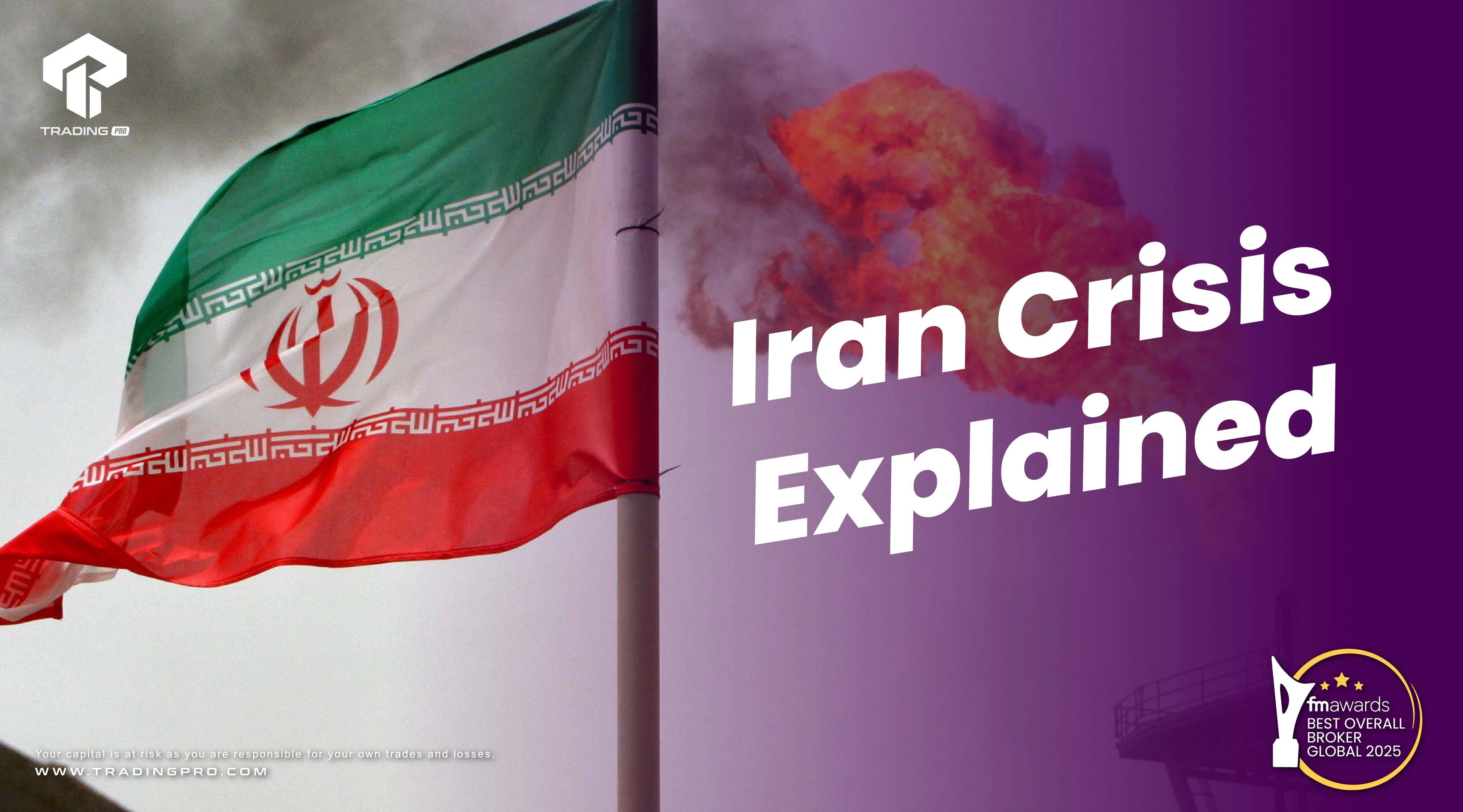
Iran Crisis Explained: Why Protests, Oil Prices, and Gold Are All Connected
Markets don’t move on headlines.
They move under pressure.
What many headlines describe as “protests” or “unrest” in Iran are better understood as the release of long-building economic stress. Years of inflation, currency weakness, sanctions, and declining living standards have pushed pressure to a breaking point.
For traders, Iran matters because it sits at the intersection of energy supply risk and safe-haven demand, a combination that directly affects oil and gold prices.
What’s Happening in Iran
Iran is experiencing widespread unrest that began with economic hardship and expanded across multiple cities. The grievances are practical and financial rather than ideological:
- Rising living costs
- Severe currency depreciation
- Declining purchasing power
- Limited job opportunities
Authorities have responded forcefully, prioritizing stability through security deployments, arrests, and restrictions on communication. While this reduces visibility, it does not remove the underlying economic pressure.
The Deeper Issue: Economic Pressure
Iran’s unrest is rooted in structural economic strain, not a single trigger.
Sanctions, restricted oil revenues, high inflation, and currency weakness have steadily eroded living standards. When wages fail to keep pace with prices and savings lose value, frustration builds quietly until it becomes visible.
This pattern explains why unrest in Iran tends to return in waves, even after periods of apparent calm.
Why the Government Responds Hard
From the government’s perspective, large scale protests represent a direct challenge to authority.
As a result:
- Stability is prioritized over popularity
- Order is enforced rather than negotiated
- Policy adjustments are typically limited and temporary
This approach can suppress unrest in the short term, but it leaves the underlying economic pressure unresolved and keeps future instability on the table.
Why Oil Markets React
Iran remains a strategically important energy producer in a geopolitically sensitive region.
Oil prices don’t wait for confirmed supply disruptions. They move on expectations and risk perception. When tension rises in the Middle East, traders price in:
- Potential production or export disruptions
- Escalation risk across the region
- Higher shipping and insurance costs

Why Gold Responds Differently
Gold plays a different role from oil. It is not driven by supply shortages but by uncertainty and confidence.
When geopolitical risk rises especially in energy-producing regions, investors often increase exposure to gold as a hedge. Gold frequently moves earlier and more quietly than other assets.
Gold and Oil: Understanding the Correlation
Gold and oil are not permanently correlated. Their relationship changes depending on why markets are moving.
- When geopolitical risk rises:
Oil may rise on supply concerns, while gold rises on uncertainty → positive or mixed correlation - When growth fears dominate:
Oil may weaken on demand concerns, while gold strengthens as a safe haven → negative correlation
This shifting relationship is why traders should never assume gold and oil will move together.
What Happens Next
There are three realistic paths forward:
- Containment without resolution. Unrest fades from view, but economic pressure remains.
- Limited policy relief. Temporary adjustments ease pressure without fixing structural problems.
- Broader escalation. Internal instability intersects with external pressure, increasing regional risk.
All three scenarios imply continued uncertainty, which markets tend to price in quickly.
What Traders Should Watch
Rather than reacting to headlines, traders should focus on market signals:
- Oil volatility during periods of rising Middle East tension
- Risk premiums appearing even without confirmed supply disruptions
- Gold strength as an early warning of rising geopolitical or financial stress
- Shifts in gold–oil correlation, which reveal whether markets are focused on risk or growth
- Sanctions, shipping routes, or escalation rhetoric, which can rapidly change sentiment
Iran’s situation highlights a key trading lesson:
Economic pressure, geopolitics, and market volatility are deeply connected. Understanding those connections helps traders stay proactive rather than reactive.
Want clear macro breakdowns that connect geopolitics with real market impact?
Follow TradingPRO on our social media channels for timely insights on global risk, commodities, and how professional traders read uncertainty.
Facebook | Instagram | Telegram | LinkedIn | Twitter (X)


