




- Published on: 2022-04-19 09:18:00
Growth vs Value Stocks: Which Strategy Works Best and How to Use Both
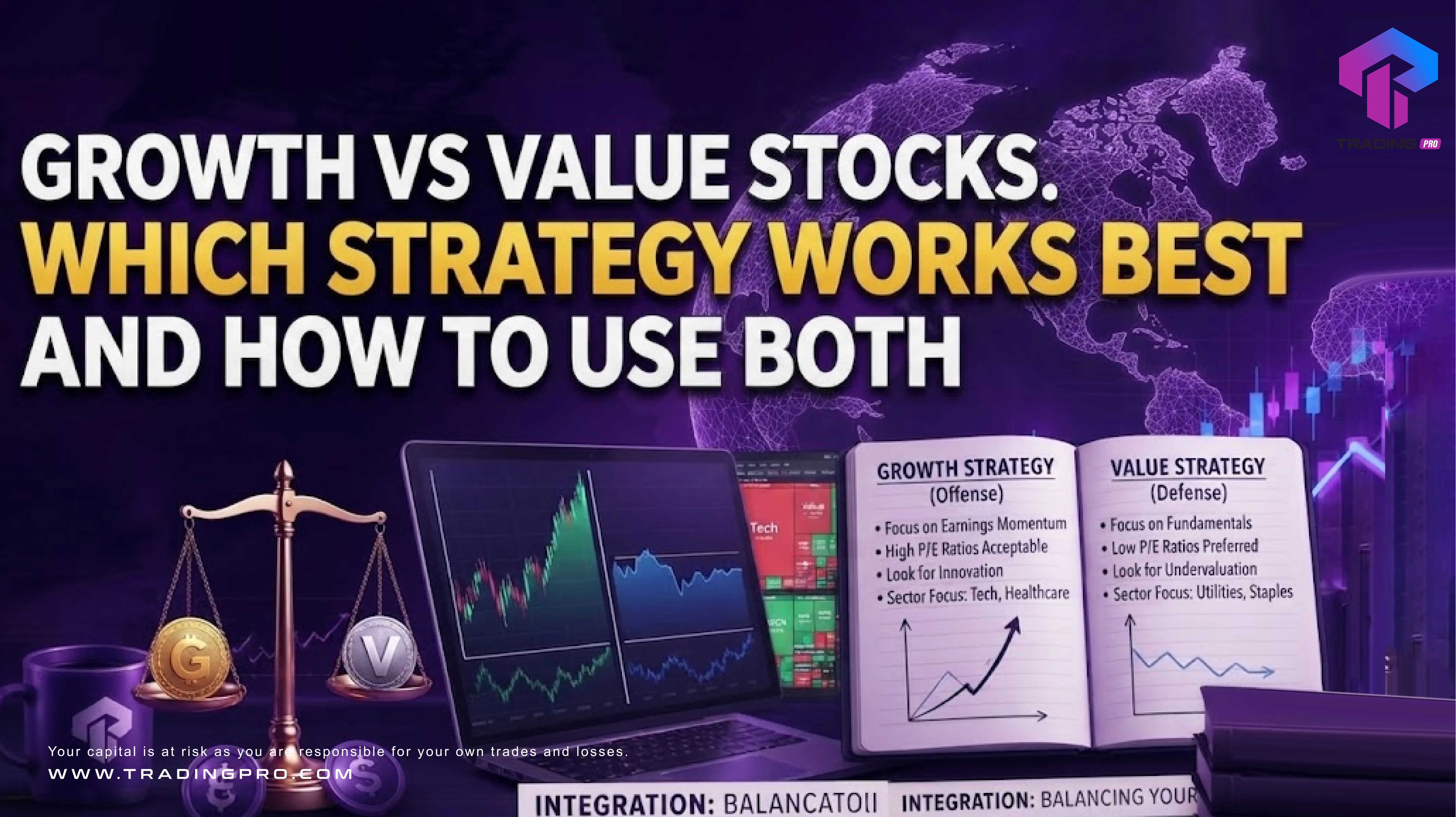
Few debates in investing generate more heat than growth versus value. On one side, growth investors chase companies expanding revenue and earnings at exceptional rates, willing to pay premium valuations for the promise of outsized future returns. On the other, value investors hunt for fundamentally sound businesses trading at discounts to their intrinsic worth, prioritising margin of safety over growth potential. Both approaches have passionate advocates, long track records of success, and periods of significant underperformance.
The reality is that neither approach is universally superior. Each tends to outperform in specific market environments, and the most sophisticated investors understand how to identify where they are in the market cycle to tilt their approach accordingly — or how to combine both in a portfolio that captures the strengths of each. This guide breaks down the growth versus value debate in depth and gives you the frameworks to make more informed decisions with your equity trading on TradingPRO.
Defining Growth Investing
Growth investing focuses on companies that are expanding their revenues, earnings, or market share at rates significantly above the broader market average. These businesses are typically reinvesting the majority of their profits back into the company to fuel continued expansion, which means they often pay little or no dividend. Investors in growth stocks are betting primarily on capital appreciation — the stock price rising as the company's business grows and becomes more valuable over time.
Classic growth stock characteristics include high revenue growth rates (often 20-50%+ annually), elevated price-to-earnings and price-to-sales ratios reflecting premium valuations, large addressable markets with significant untapped opportunity, competitive moats that protect their market position, and strong management teams with a track record of capital allocation. Technology companies have dominated growth investing for the past decade, but growth characteristics can be found across sectors.
The Risk Profile of Growth Stocks
Growth stocks carry a distinctive risk profile that investors must understand before committing capital. Because the majority of their perceived value lies in future earnings growth rather than current profitability, they are highly sensitive to changes in interest rate expectations. When interest rates rise, the present value of distant future cash flows falls — mathematically compressing the valuations that growth stocks command. This dynamic played out sharply in 2022 as the Federal Reserve signalled aggressive rate increases, with many high-growth names falling 50-80% from their 2021 peaks.
Growth stocks are also particularly vulnerable to any deterioration in their growth narrative. A single quarter of revenue growth missing expectations can trigger severe sell-offs, as the entire investment thesis for many growth stocks rests on maintaining exceptional growth rates over extended periods. The higher the valuation, the greater the risk of violent de-rating if growth disappoints.
Defining Value Investing
Value investing, intellectually rooted in Benjamin Graham's concept of 'margin of safety' and popularised globally by Warren Buffett, focuses on identifying businesses trading at prices below their estimated intrinsic value. The premise is that markets periodically misprice businesses — due to short-term pessimism, cyclical downturns, temporary earnings disruptions, or simply neglect — creating opportunities to buy quality assets cheaply and profit when the market eventually corrects the mispricing.
Value stocks typically feature lower price-to-earnings, price-to-book, and price-to-sales ratios than the broader market, often accompanied by meaningful dividend yields. They tend to be found in more mature, cyclical, or out-of-favour industries — financials, energy, industrials, and consumer staples — rather than high-growth technology sectors.
The Risk Profile of Value Stocks
The primary risk in value investing is what practitioners call a 'value trap' — a stock that appears cheap on traditional metrics but is cheap for good reason, because the underlying business is genuinely deteriorating rather than temporarily out of favour. Distinguishing between temporary adversity and structural decline is the central analytical challenge in value investing. A low P/E ratio attached to a business in secular decline is not a value opportunity — it is a warning sign.
Value stocks also tend to be more economically sensitive than growth stocks, meaning they can underperform significantly during recessions or periods of slowing economic growth. Financial stocks, for example, face pressure from both rising loan defaults and compressed net interest margins during economic downturns, regardless of how cheap they appear on a price-to-book basis.
When Does Each Approach Outperform?
The historical performance record of growth versus value is profoundly influenced by the interest rate and economic environment:
- Low Interest Rate, Expanding Economy: Growth tends to significantly outperform. Cheap money makes future earnings more valuable in present terms, supporting premium valuations. Investors are willing to pay up for companies with exceptional growth prospects when risk-free rates offer minimal competition.
- Rising Interest Rate Environment: Value tends to outperform. As rates rise, the present value of distant growth stock earnings falls, compressing multiples. Meanwhile, value sectors like financials directly benefit from rising rates through improved net interest margins.
- Economic Recovery Phase: Cyclical value stocks — energy, industrials, materials, financials — typically lead the recovery as economic conditions improve and depressed earnings recover toward normalised levels.
- Late Cycle / Slowing Growth: Defensive value characteristics become more attractive as investors rotate toward predictable earnings and dividend income over speculative growth.
Building a Blended Growth and Value Portfolio
The most resilient long-term equity portfolios typically incorporate elements of both growth and value, rather than making an all-or-nothing commitment to either philosophy. A blended approach might involve:
- Core Value Holdings — anchor the portfolio in fundamentally sound, attractively valued businesses with strong balance sheets and consistent cash flow generation, providing stability and dividend income through market cycles
- Growth Satellite Positions — allocate a portion of the portfolio to high-conviction growth opportunities with large addressable markets, competitive advantages, and reasonable valuations given their growth trajectory
- Cycle Tilting — systematically tilt the balance between growth and value exposure based on the prevailing interest rate and economic environment, increasing value exposure when rates are rising and growth exposure when monetary conditions are easing
- Quality Filter Across Both — whether evaluating a growth or value opportunity, insist on quality: strong balance sheets, competent management, and durable competitive advantages. Cheap and bad is still bad; expensive and exceptional can still be a great long-term investment.
Practical Metrics for Comparing Growth and Value Stocks
P/E Ratio (Price to Earnings): Compares price to current or forward earnings. Growth stocks typically trade at high P/E ratios justified by expected earnings growth; value stocks at lower ratios relative to sector peers.
PEG Ratio (Price/Earnings to Growth): Adjusts the P/E ratio for the expected earnings growth rate. A PEG below 1.0 is traditionally considered undervalued for a growth stock; above 2.0 may indicate overvaluation relative to growth.
P/B Ratio (Price to Book): Compares price to net asset value. Particularly relevant for financial and industrial value stocks; less meaningful for asset-light growth businesses where intellectual property and brand value dominate.
EV/EBITDA: Enterprise value relative to earnings before interest, tax, depreciation, and amortisation. Useful across both growth and value as it accounts for debt levels and capital structure differences.
Free Cash Flow Yield: Free cash flow divided by market cap. A high free cash flow yield is a classic value signal; growth investors may accept low or negative FCF yield if the business is investing heavily for future returns.
Trading Growth and Value Stocks with TradingPRO
- Access to Global Equities — trade growth and value stocks across US, European, and Asian markets from a single TradingPRO account, allowing genuine diversification across both styles and geographies
- Sector and Stock Screening Tools — filter stocks by key fundamental metrics to identify growth and value opportunities aligned with your strategy
- Real-Time Market News — stay on top of earnings reports, central bank decisions, and sector-specific news that drives relative performance between growth and value
- Flexible Position Sizes — build both core value holdings and more tactical growth positions with position sizes appropriate to each investment's risk profile
Conclusion: Context Determines Which Wins
The growth versus value debate does not have a permanent winner. Both approaches have delivered exceptional long-term returns in the hands of disciplined, knowledgeable investors. What distinguishes the best investors is not a rigid commitment to one style, but a nuanced understanding of when each is likely to perform well — and the flexibility to adjust their approach accordingly.
Whether you are drawn to the earnings momentum of high-growth technology leaders or the contrarian appeal of undervalued cyclicals, TradingPRO gives you the platform to execute your equity strategy across global markets with professional precision. Open your account today and start building a portfolio that can perform in any market environment.
Trade Global Equities with TradingPRO


