



- Published on: 2026-06-05 09:45:05
Fear and Greed: The Two Enemies of Every Trader
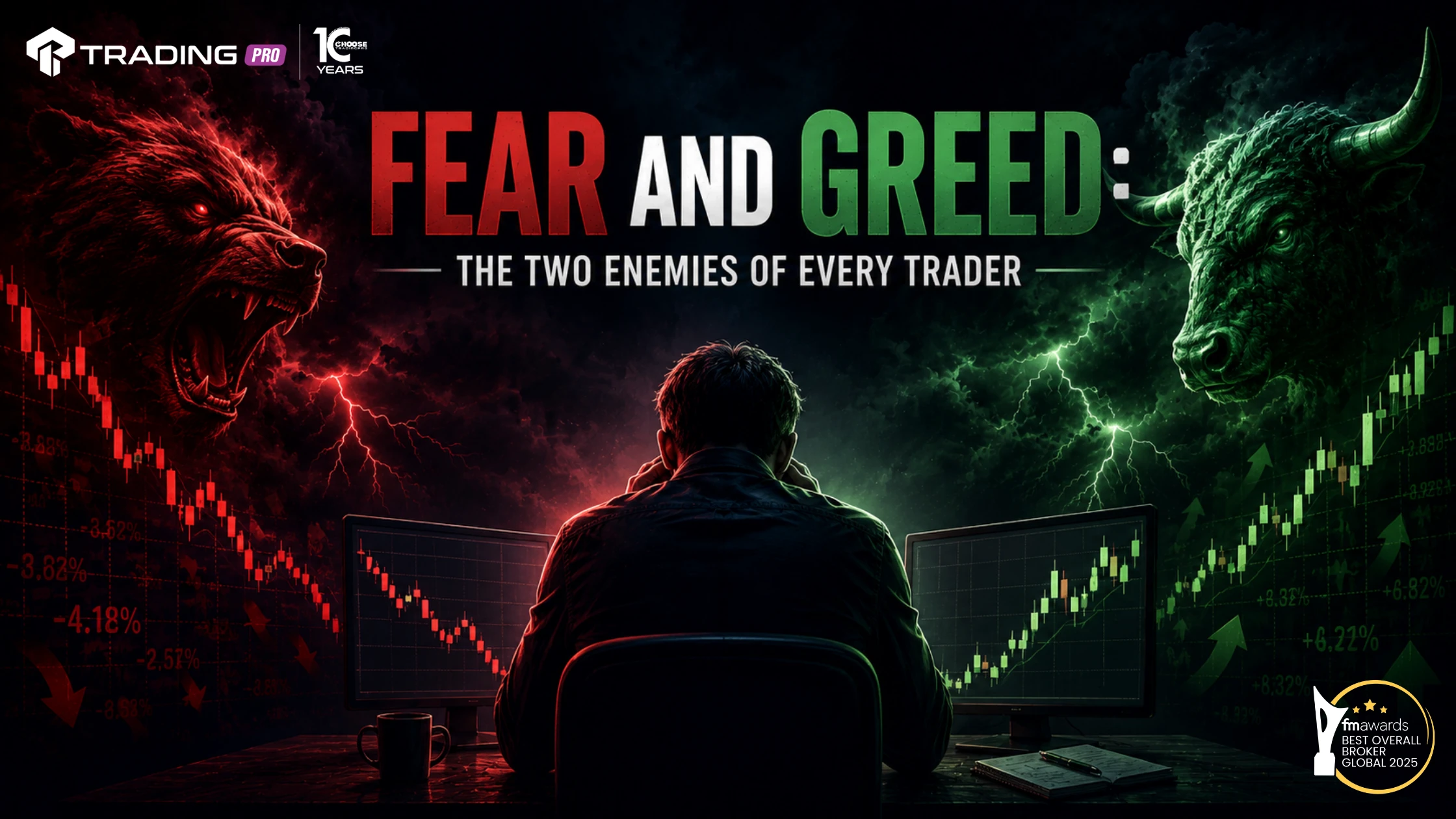
In trading, technical analysis and strategy matter — but psychology matters more. Of all the forces that influence trading decisions, two emotions stand above the rest in the damage they consistently inflict: fear and greed. These are not occasional distractions. They are powerful, persistent forces that distort judgment, erode discipline, and ultimately separate traders who achieve consistency from those who perpetually struggle.
Understanding how fear and greed operate in the forex market and broader financial markets is not optional for serious traders. It is foundational to long-term profitability.
How Fear Undermines Trading Decisions
Fear in trading typically emerges after a losing streak or during periods of heightened market uncertainty. It is rooted in a deeply human desire to avoid pain — and in a trading context, that instinct becomes a liability.
When fear takes hold, traders begin to:
- Close winning positions well before their targets are reached
- Avoid valid, high-probability trade setups out of hesitation
- Reduce position sizes impulsively, disconnected from their risk management rules
- Hesitate at the moment of execution, missing the entry entirely
- Exit trades at the first sign of a minor pullback, before the setup has had room to develop
A degree of caution is healthy and appropriate — particularly following a difficult period. But excessive fear is corrosive. A trader who consistently exits too early or skips quality setups will struggle to maintain a positive expectancy over time, regardless of how sound their underlying strategy is.
This is the key distinction: losses are a normal and expected part of trading probability. Fear becomes genuinely dangerous when it prevents you from executing your strategy correctly — when the emotion overrides the plan.
How Greed Destroys Trading Accounts
If fear is the emotion that stops traders from taking what the market offers, greed is the one that makes them reach for far more than they should. It is, in many ways, the more destructive of the two — because it tends to arrive disguised as confidence.
Greed shows up when traders:
- Increase lot sizes after a strong winning run, convinced the momentum will continue indefinitely
- Remove stop-losses to "let a trade run," exposing themselves to unlimited downside
- Hold positions far beyond their original profit targets, watching manageable gains turn into losses
- Overtrade in pursuit of more opportunities than the market is genuinely offering
- Risk an outsized portion of their capital on a single setup, driven by conviction rather than calculation
After a sustained winning period, confidence can quietly cross the line into overconfidence. Traders begin to feel invincible — as though they have finally cracked the market. This is precisely the moment risk management rules get discarded. And the market, with characteristic indifference, will find that moment and respond accordingly.
One oversized loss driven by greed can erase weeks or months of disciplined, steady gains. Greed makes traders focus on how much they can make. Professionals are always focused on how much they can lose.
Why Fear and Greed Create a Destructive Cycle
What makes these two emotions particularly damaging is the way they feed directly into each other, creating a cycle that is difficult to break without deliberate intervention:
- A trader experiences a significant loss — fear sets in
- The desire to recover quickly overrides rational thinking — greed takes over
- Impulsive, oversized trades produce further losses
- Confidence collapses, and the emotional instability deepens
- The cycle repeats — with each rotation leaving the trader more exhausted and less disciplined than before
This emotional cycle leads to chronically inconsistent performance, deteriorating risk management, and the kind of mental fatigue that makes sound decision-making almost impossible. It is not a strategy problem. It is a psychological problem. And it requires a psychological solution.
Breaking the cycle demands three things: structure, discipline, and honest emotional self-awareness.
How to Control Fear and Greed in Your Trading
The most effective antidote to emotional trading is not willpower — it is process. When clear, pre-defined rules govern your decisions, the space for fear and greed to operate shrinks dramatically.
Practical steps to maintain control:
- Use fixed, rule-based risk management — define your risk per trade in advance and never deviate from it, regardless of recent results in either direction
- Define your rules before every trade — entry criteria, exit targets, and stop-loss placement should all be determined before execution, not during it
- Keep a detailed trading journal — documenting both your trades and your emotional state creates the self-awareness needed to identify patterns before they become entrenched habits
- Think in probabilities, not outcomes — no single trade defines your edge; what matters is performance over a large sample, and internalising that truth reduces the emotional weight of any individual result
- Accept losses with composure — a loss that falls within your expected risk parameters is not a failure; it is the cost of operating within a probabilistic environment
When rules replace emotion as the driver of trading decisions, performance stabilises. Not because the market becomes easier — but because the trader becomes more consistent.
Final Thoughts
Fear and greed will never disappear entirely. They are hardwired into human psychology, and the financial markets are specifically designed to amplify them. The goal is not to eliminate these emotions — it is to build a trading process robust enough that they cannot override it.
The traders who achieve long-term consistency are not those who feel no fear or greed. They are the ones who have built systems, habits, and self-awareness strong enough to act on their plan regardless of how they feel.
Structure over emotion. Process over impulse. Always.
Fear and greed will always be in the market — make sure they're not in your decisions.
Join the TradingPRO community and get access to daily market analysis, trading psychology guides, and strategy breakdowns — completely free.
Facebook | Instagram | Telegram | LinkedIn | Twitter (X)


